The Honey & Cinnamon Recipe For Memory Loss Is Real. I Tested It For 30 Days. Then I Found They Left Out the Key Ingredient.
Maybe you’ve seen the viral ‘memory loss’ video, with the movie stars and the billionaires raving. I’m 58. I tested it, and discovered it’s not what it seems…but there is a fix!

Here’s what nobody tells you about that recipe. It’s missing an ingredient.
And it’s the one they keep saying out loud.
The ‘Dementia Gone’ Recipe Is Real. But the Correct Formulation is Critical
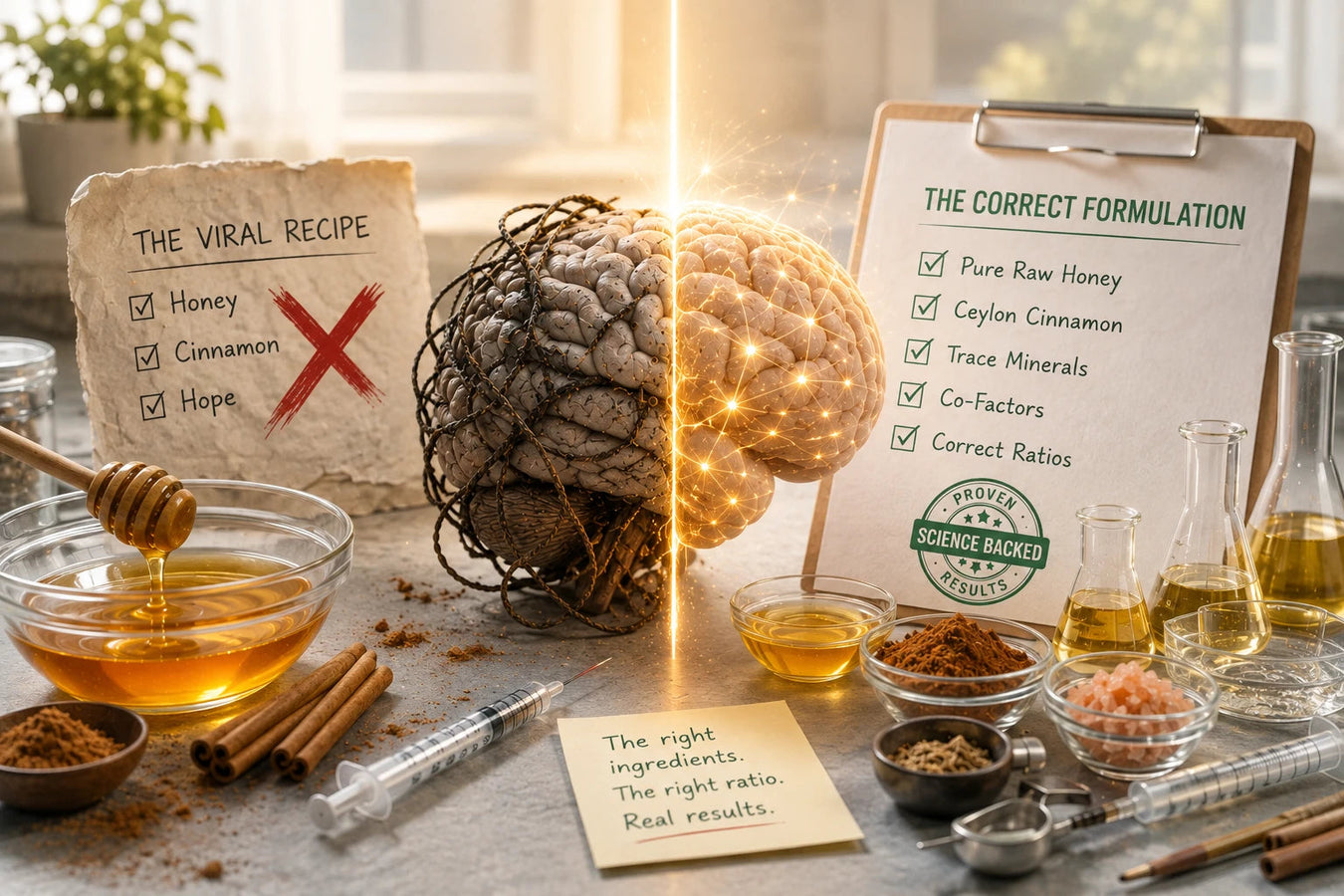
You’re halfway through a sentence and you forget a word. It’s the name of the thing you’re holding, and it’s on the tip of your tongue.
But the word stays out of reach.
Maybe you’ve started forgetting where you put your car keys, or your wallet.
I’m not a doctor, but I read specifications for thirty one years. As a building inspector, my whole job was walking into a room and noticing what was wrong.
Then my older brother Denny started forgetting things, and worried it could happen to me, too.
So when that viral video came round, I did what a lot of you did.
I tried it.
Honey and cinnamon, every morning, exactly the way they said it. I kept a log, because that’s how I’m built.
Thirty days.
Nothing happened. Not one thing.
Because the version that went round the internet is missing an ingredient, and I can prove it.
Now I know what memory loss really is. Something is physically blocking your brain from the fuel it needs.
Clear that, and things change quickly.
You CAN restore memory, and do it quickly and easily. But you need exactly the right recipe.
The Morning I Didn’t Recognize My Own Street

It was a Tuesday in March. I was driving back from the hardware store on a road I’d used for twenty years.
I came to the junction at the end of it and I stopped. And then I just sat there.
I knew I was supposed to turn. I didn’t know which way.
It lasted about four seconds but felt much longer.
I drove home and I didn’t tell my wife. I told nobody for nine months.
Because I already knew what it looked like. I’d been watching it happen to my brother.
Denny fitted kitchens for a living, and he could work out a run of cabinets in his head faster than I could draw it on paper.
Last spring he asked me the same question three times in one afternoon.
And the third time, he knew. I watched it land on his face. He said sorry, then he laughed at himself, then he changed the subject.
That’s the part that finished me. He knew it was happening to him.
I took him to his doctor and sat in with him, because he asked me to.
He was perfectly kind about it. A few questions, something written down, then the thing they all say.
“At his age, Dale, this is fairly normal.”
One in nine people over sixty five is living with this right now. I did that arithmetic lying in the dark more than once.
So when that video started turning up everywhere I looked, I paid attention.
Because for the first time, somebody was saying out loud that this isn’t something you just have to accept.
Honey and cinnamon. An old recipe. Famous faces swearing by it.
I thought it was probably nonsense.
But I am the man who checks. So that’s what I did.
Thirty Mornings. Thirty Entries. Nothing.

I started on the first Monday in April.
A heaped teaspoon of raw honey. Half a teaspoon of ground cinnamon. Warm water, stirred, first thing, before anything else went in me.
That’s what the video said to do. That’s what I did, every single morning, without missing one.
And I wrote down every day, because a job without a record is just an opinion.
Day one. “Tastes better than I expected. Nothing to report.”
Day nine. “Couldn’t get the word for thermostat. Stood in the hall pointing at it.”
Around day nineteen I decided the problem might be my ingredients.
So I bought Ceylon cinnamon from a proper spice shop, ground that week, and raw unfiltered honey from a man at the farmers market who keeps his own bees.
Day twenty three. “Couldn’t remember Bill’s name at the mailbox. Known him eleven years.”
Day thirty. “Same as day one.”
I didn’t stop there either, because thirty days felt like giving up early. I carried on to forty one.
Nothing. Not one improvement I could honestly write down.
Day forty one was the worst morning of the lot.
But when a system doesn’t perform the way the specification says it will, there are only two possibilities. Either the specification is wrong, or something that is supposed to be in there is not in there.
So I stopped testing the recipe.
And I started checking what was actually in the bottle they wanted me to buy.
So I Bought The Capsules. All Six Brands Of Them.
Before I gave up altogether, I went back to the video to get the exact amounts. The proper ratio, and when to take it.
I watched the whole thing through to the end. Then I watched it again.
There is no recipe in it.
Go and check for yourself if you don’t believe me. Sixty odd minutes about an ancient honey and cinnamon remedy, and it never once tells you how to make it.
What it does tell you, right at the end, is where to buy a bottle.
So I bought the bottle.
And then, because that’s the job, I bought five more from five other companies selling the same idea.
The best part of three hundred dollars, all in.
One bad bottle is bad luck. Six samples tells you which.
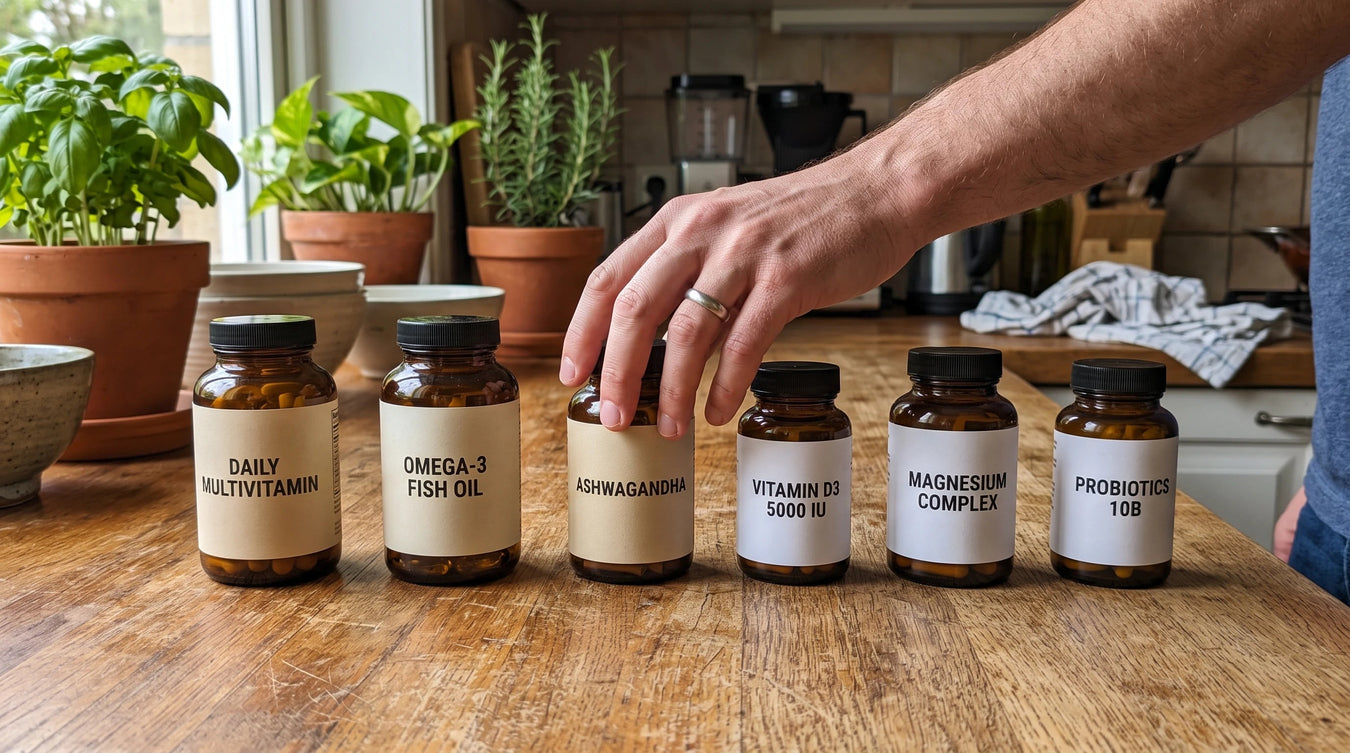
They arrived over about ten days. I lined them up on the counter by the coffee maker.
And I remember standing there feeling quite hopeful about it, which I know now was a bit soft of me.
Then I picked one up and turned it round to read the back.
I have not looked at those bottles the same way since.
Six Bottles. Six Labels. One Empty Column.
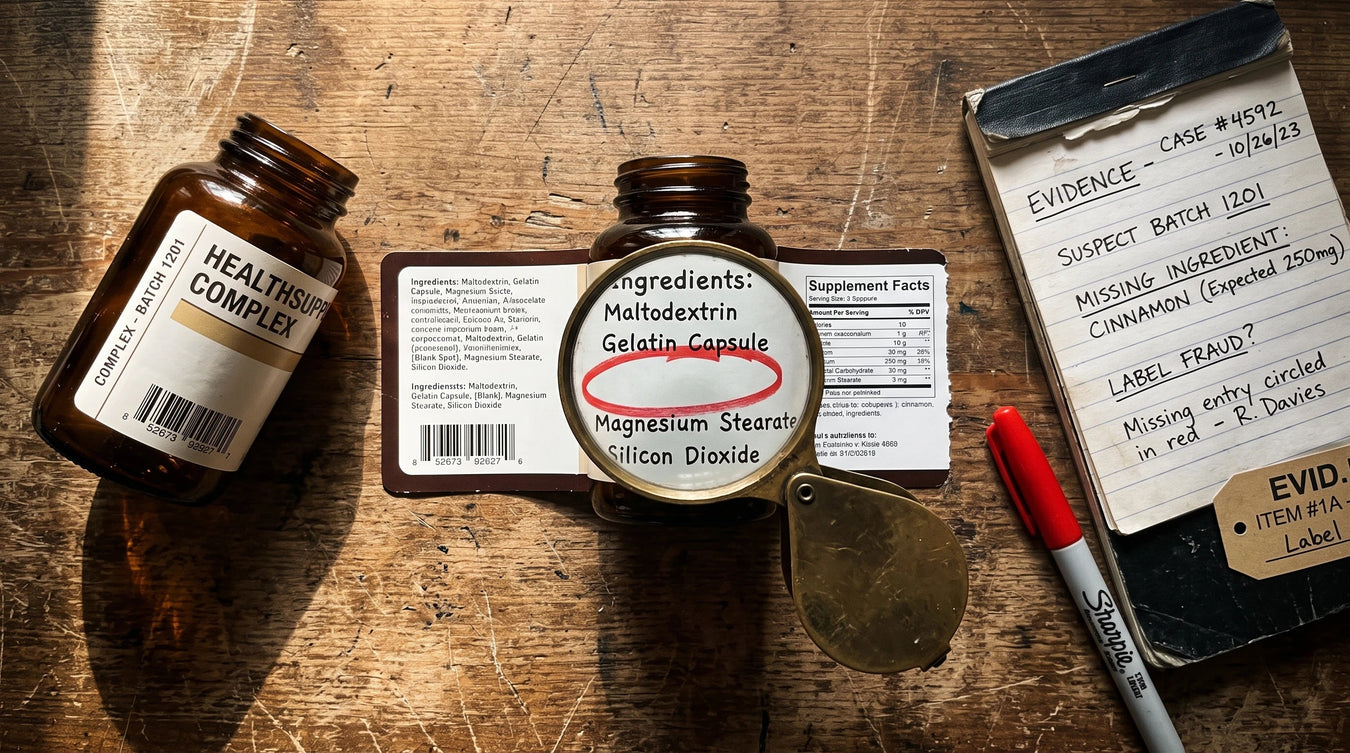
The panel on the back of a supplement bottle is not marketing. It is a legal document.
The front can say more or less what it likes. The back has to list what is actually in there, and how much.
So the back is the only part I trust. It’s the drawing rather than the brochure.
Bottle one. Honey extract, a decent amount of it. A form of lithium. Some B vitamins.
I read it twice.
No cinnamon.
I assumed I’d picked up a bad one. So I put it down and picked up the next.
Honey extract. Lithium. No cinnamon.
By the fourth bottle I’d stopped hoping and started doing what I’d have done on a job site. I got a sheet of paper and made a schedule.
Six columns, one for each bottle. A row for every ingredient. Tick what’s there.
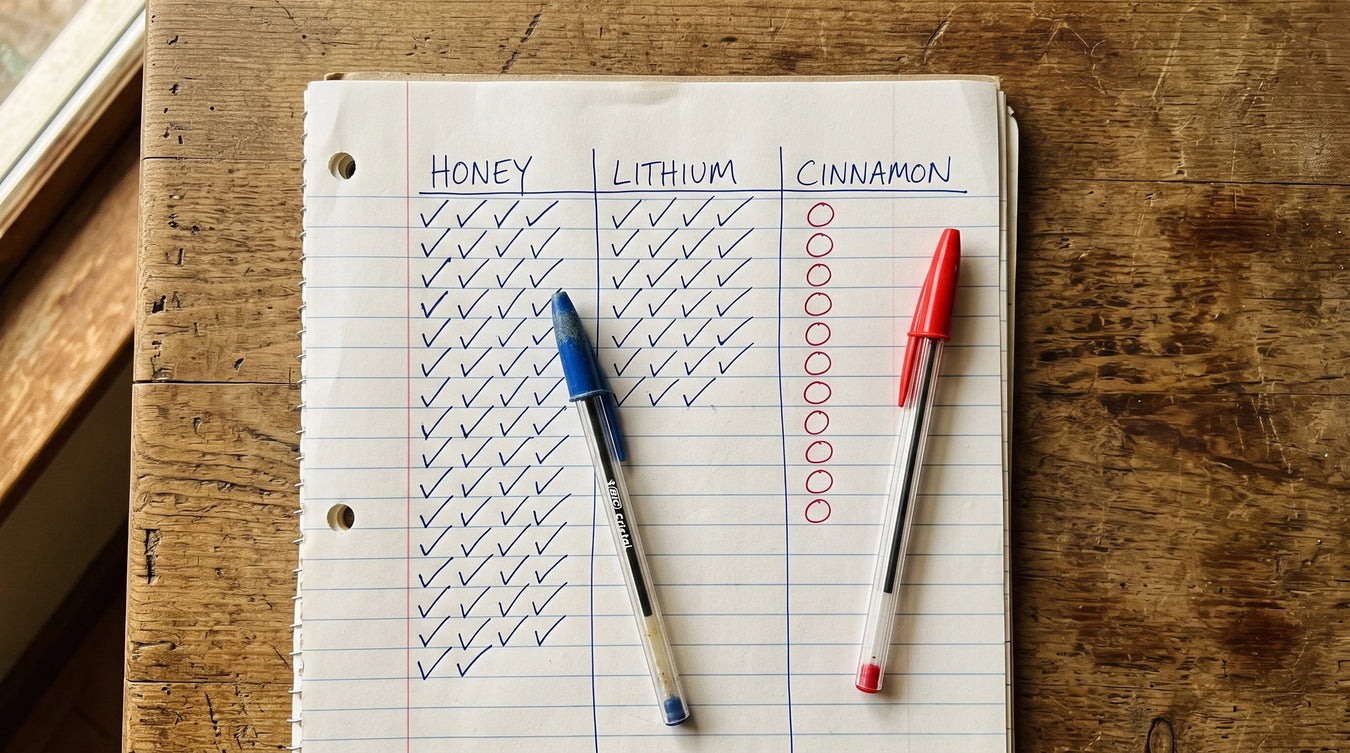
Here’s what thirty one years of that habit produced, at my own kitchen table, on a Thursday afternoon.
Honey extract: six out of six.
Some form of lithium: four out of six.
Cinnamon: none out of six.
Not a trace. Not a token pinch thrown in so they could print it on the front. Nothing at all, in any of them.
I want to be fair here, because being fair is most of the job. These are not fake products. The honey extract in most of them is the real thing and it is not cheap.
And I’m not going to name any of them, for one simple reason.
They were all doing it. Every last one. It is how the whole shelf is built, so naming a single company would only let the other five off the hook.
Then I went back to the video one more time, with a pen in my hand.
I counted.
In the first six minutes, they say the word cinnamon seven times.
Seven. I marked every one of them. Then I sat through the remaining fifty odd minutes. They never say it again.
Not once. It carries the opening of that video and then disappears, well before anybody is asked for a credit card.
Because the word cinnamon is what makes the whole story work. It sounds ancient and harmless and true. It’s the reason you and I both went to the kitchen cupboard.
And it is not in the thing they sell you.
So I had my answer about why my forty one days did nothing. I’d been handed two thirds of a recipe.
What I still didn’t have was the part that actually matters.
Why does that third ingredient change everything? And why would anybody leave out the cheapest thing on the list?
That took me another three weeks of reading. And then it took a woman in Vermont to show me what to do about it.
The Power’s In The Street. It Can’t Get Into The Building.
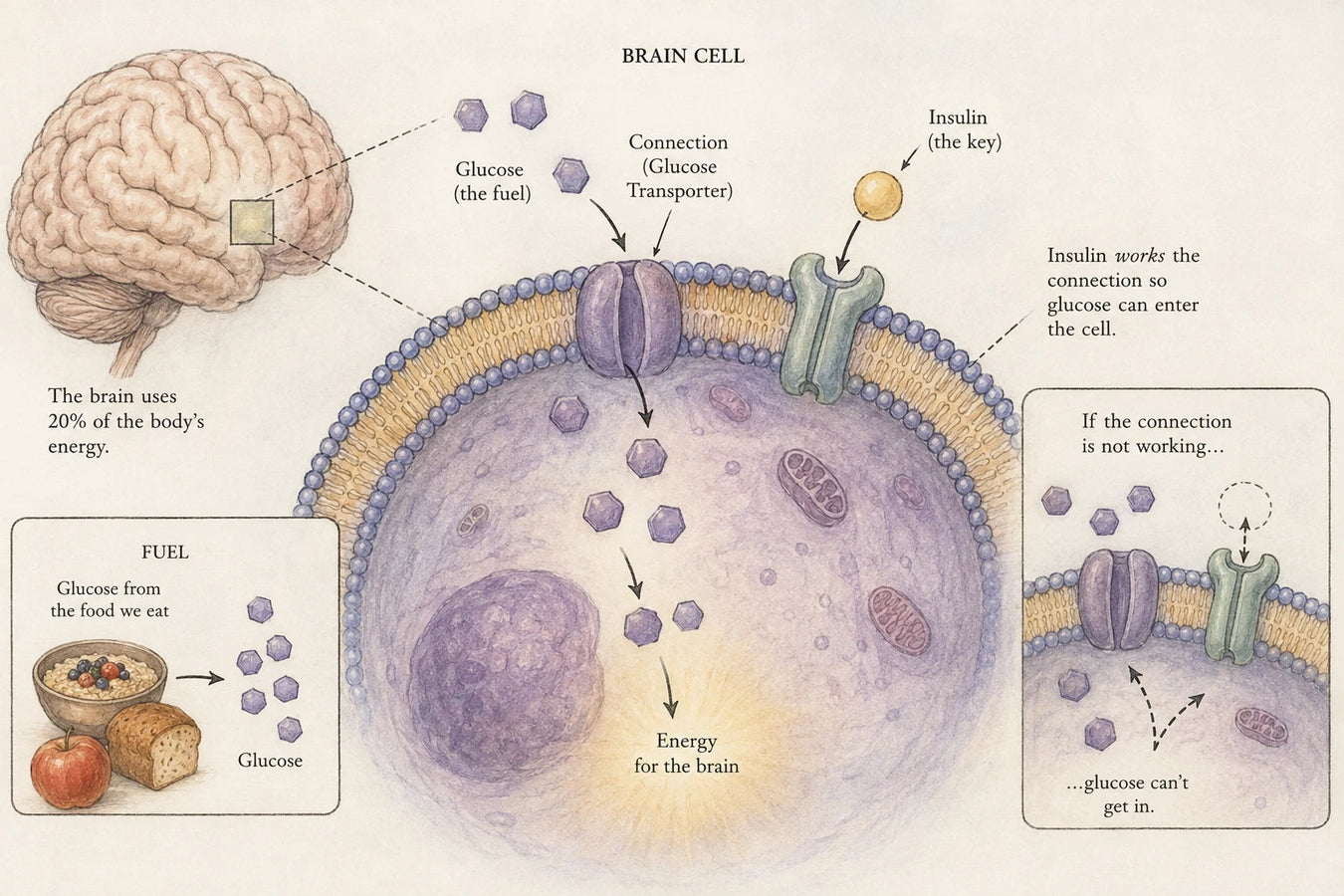
I’m going to explain what I found the way it finally made sense to me, which is as a building.
Your brain runs on one fuel. Glucose. What your food turns into.
Your brain is about two percent of you and it burns twenty percent of all the energy you’ve got.
But the fuel can’t simply walk into a brain cell. Every cell has a connection point, and the connection has to be working.
Insulin is what works it.
And here is the thing I understood immediately, because I have stood in front of it a thousand times.
I’ve been in houses with the power live in the street and not a light on indoors. The supply is there. The building is dark. It’s the connection that’s gone.
That is what’s happening in your head.
Because we have a heavy metal problem now. Cadmium. It’s in pesticides, in rice, in tap water, in the air anywhere near industry.
You can’t see it or taste it. And your body has no way of getting rid of it, so it just accumulates. For decades.
It crosses into the brain and corrodes the connections.
The fuel is sitting in your blood, an inch away, and your brain cannot get at it.
That’s when your memory fails.
And when you eat, your blood sugar goes so high that a little forces its way through anyway. Which is a starving brain getting a scrap. It doesn’t last past lunchtime.
Some researchers call this Type 3 diabetes. Diabetes of the brain.
That was the best news I’d had all year. Because a corroded connection is not a worn out building. A corroded connection is a repair.
Three Jobs. In That Order. Miss One And You’ve Wasted The Lot.
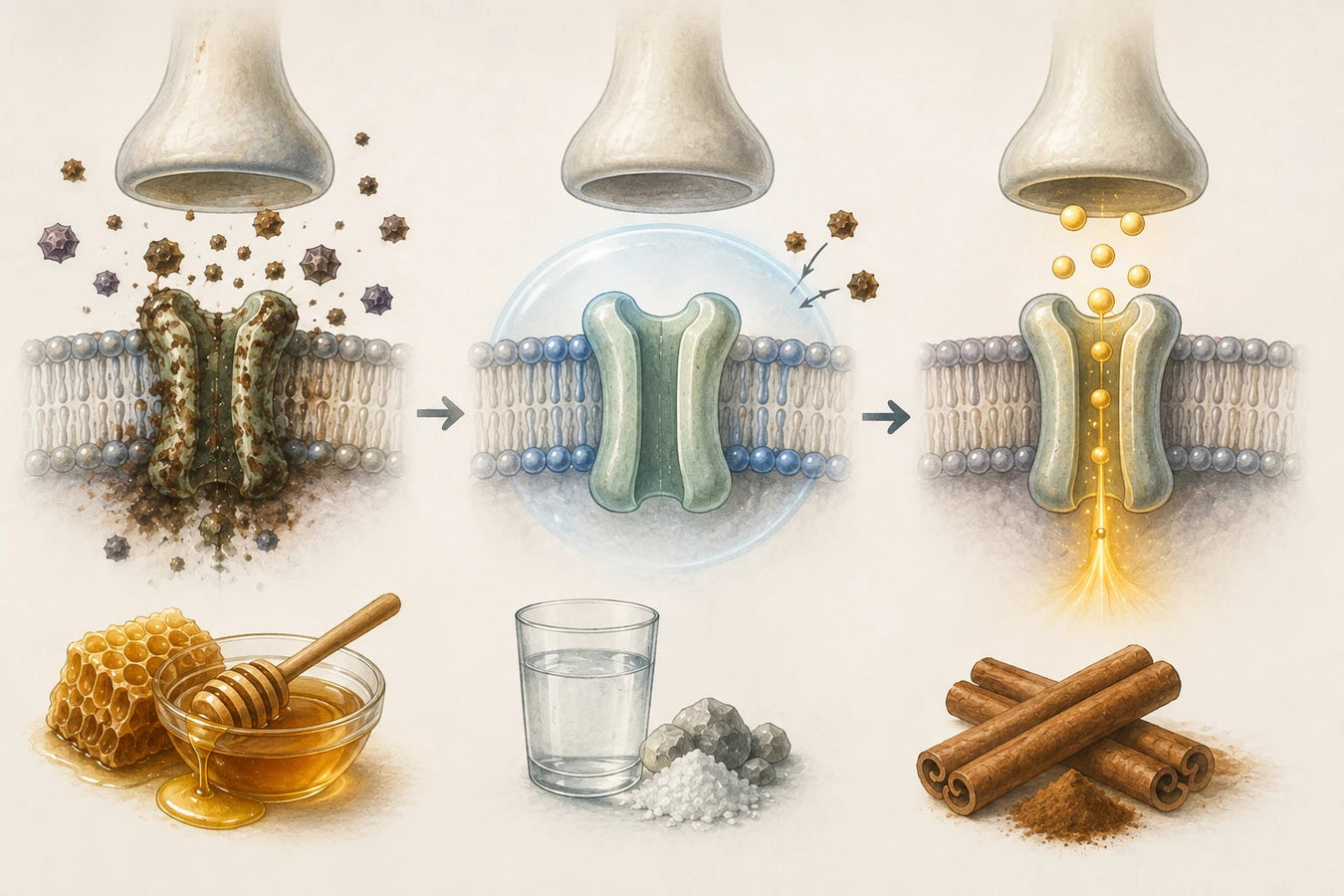
The proper recipe has three ingredients and each one does exactly one job.
Step one. Clean the corrosion off, with raw honey.
Not the filtered stuff in the squeezy bottle, which has been heated and stripped of the part that matters.
Real raw honey carries compounds called polyphenols. They are among the very few things small enough to cross into the brain at all. They grab hold of the metal and carry it out.
Step two. Protect it, with lithium orotate.
The mineral nobody has heard of. Not the industrial dose used in psychiatry. A trace amount, the way it turns up naturally in spring water.
In 2025, Harvard researchers went through the brain tissue of hundreds of older people. Of every metal they measured, lithium was the only one that came back lower in the brains of people with memory loss.
Its job is to stand in front of the connection and stop new metal landing on it. You’re exposed to more every single day, so cleaning on its own buys you about a week.
Step three. Make the connection work again, with cinnamon.
And this is the one they left out.
You can clean a connection and you can protect it. It still has to actually carry the current.
In two studies published in the journal PLOS One, cinnamon reversed exactly this kind of insulin resistance in the brain. In plain terms, it gets the fuel moving again.
Clean. Guard. Open.
So now I had my second answer, and it’s uglier than the first.
They leave the cinnamon out because the cheap cinnamon is a liability.
The ordinary cassia cinnamon in your rack carries a compound called coumarin, and at supplement doses, day after day, that becomes a problem for the liver. The species that doesn’t carry it costs a great deal more.
So they keep the word, because the word is what sells the video.
And they drop the ingredient, because the ingredient is what costs money.
The Third Ingredient Isn’t In Anybody’s Kitchen
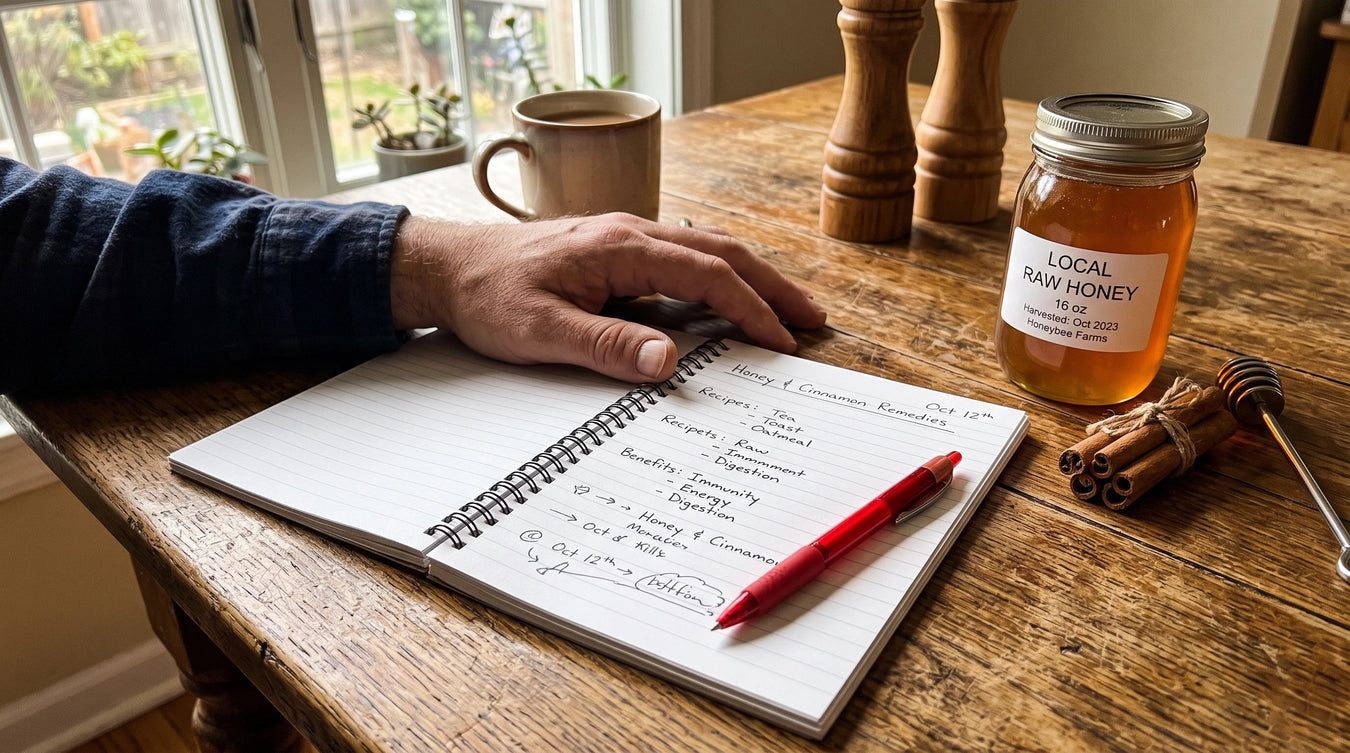
I did what I’ve done after every failed job I’ve ever been on. I went back through my own paperwork with a red pen.
I had made three mistakes.
Mistake one. The honey.
Polyphenol content varies by an enormous margin depending on the flowers, the season, and how warm it got in the jar on the way to you.
Two jars can both say raw and be worlds apart. No way to tell from the outside, and no beekeeper alive is testing for it.
So even after I switched to the good stuff, I was dosing myself with an unknown quantity every morning.
Mistake two. The cinnamon.
Buying Ceylon was the right instinct. But ground cinnamon starts losing the compound that does the work from the day it’s ground, and the useful part barely dissolves. Stirring it into warm water is mostly just making the water brown.
To get a working amount out of a spice jar you’d be eating several heaped teaspoons a day. With the cheap species, that’s the liver problem. With the good species, most of it goes straight through you.
Mistake three. And this is the one that finished it.
There was never any lithium in what I was taking.
Not a trace. Because it is not a food, and you cannot buy it in a supermarket.
It doesn’t grow. It isn’t in honey, it isn’t in cinnamon, and it is not in your cupboard. In the amounts that matter it occurs naturally in some spring water and almost nowhere else.
And the form matters as much as the amount, because most forms don’t cross into the brain at all.
So the entire time I was being so careful. Weighing things out. Testing, correcting, extending, writing down every day of it.
I was very carefully making two thirds of something.
And none of that could save me, because you cannot measure your way out of an ingredient you have not got.
So if you tried this at home and felt nothing, now you know why. It was never your discipline and it was never your fault.
The recipe that went round the internet cannot be made in a kitchen. Not by me, not by you, not by anybody.
Which left me with one question I could not get past.
If all of this is sitting there in published research, and it is, then why has no doctor ever said a word about it to me or to Denny?
Sixteen Years Of Building On A Faked Drawing
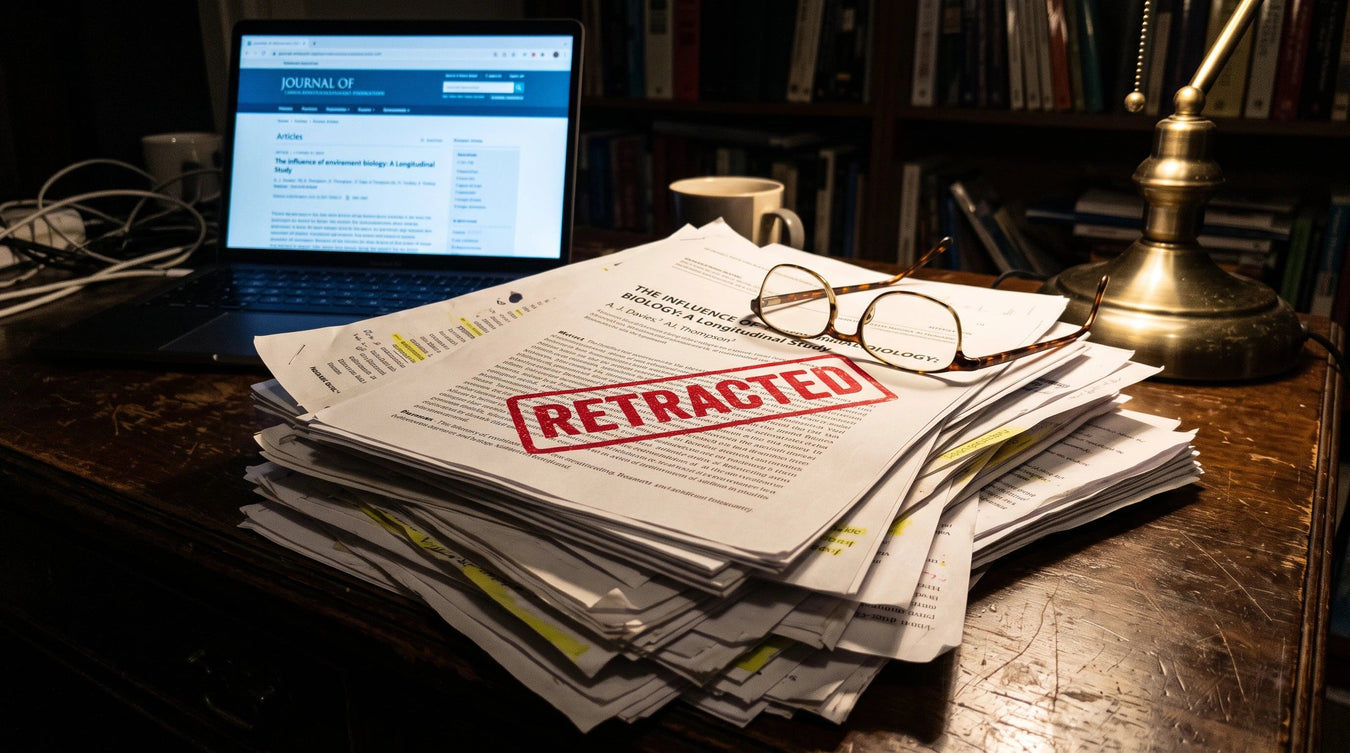
I’ll keep this short, because it made me too angry to write about at any length.
In 2006 a paper came out saying memory loss was caused by a particular sort of plaque building up in the brain. Amyloid, it’s called.
It became the foundation for everything after it. Other researchers cited that paper more than two thousand two hundred times. Careers were built on it. Billions in funding went after it. Drug after drug was designed to clear that plaque out.
Then somebody finally looked closely at the images in it.
They had been altered.
The journal retracted the paper in June 2024. The lead author left his post the following March.
Sixteen years.
So here’s what this actually means for you, and for Denny.
Your doctor is not a bad doctor. He was taught the plaque theory at medical school like everybody else, and the correction hasn’t reached the doctor’s office yet.
Nobody failed you. They were all aiming at the wrong target.
And while every laboratory in the world was chasing plaque, the metal sitting in those connections was not what anybody was being paid to look at.
Which is why the answer, when I finally found it, turned up in a kitchen in Vermont.
Then I Found One Label With Cinnamon On It

By this point I had a tool. I could read the back of a bottle and tell inside twenty seconds whether anybody had built the thing properly.
So I stopped reading studies and started reading labels. Dozens of them. Looking for one company, anywhere, that had put all three in.
It took me the best part of two weeks, and I found exactly one.
The cinnamon was on the panel, and the correct species of it. The lithium was there in the orotate form, which is the one that gets into the brain. And the honey extract was listed with a standardized polyphenol content, which I had not seen on any of the six bottles sitting on my counter.
I want to be honest about my reaction.
I assumed I had found a better liar.
So I called the number on the bottle, fully expecting a call center in another country.
A woman answered, and it turned out to be her company. Her name is Nora Ellison.
She isn’t a doctor and she has never been on television. She is a formulator and a researcher, and she built this because of her own mother.
I gave her a hard time for about forty minutes. I asked her what I’d have asked a contractor. Where does it come from, who tests it, what’s the real amount, and can you show me.
She could show me. Batch certificates from an outside laboratory, sent over that same afternoon, without me having to ask twice.
It had cost her the best part of a year, working out of her own kitchen, throwing away far more than she kept. Because getting the three ingredients right is only half the job. They have to be balanced against each other and taken in the right order, or you’re back to making brown water.
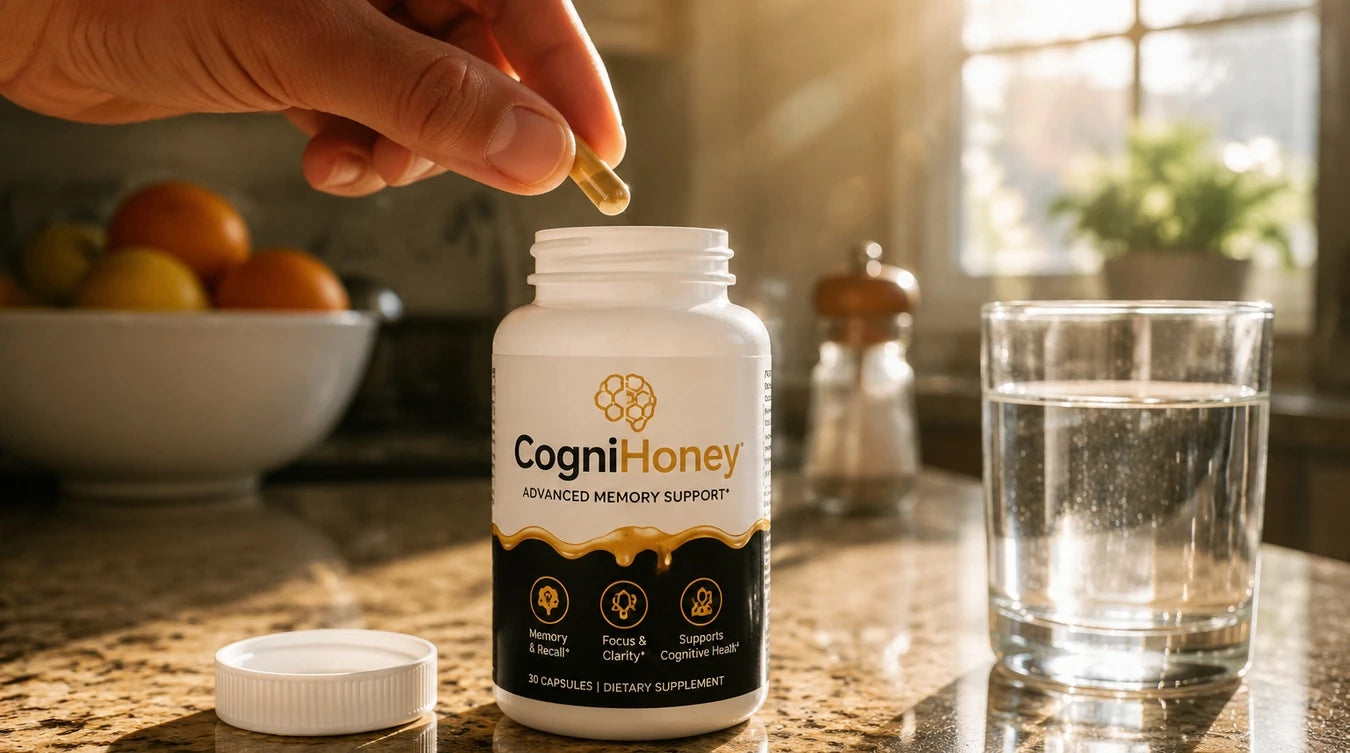
The product is called CogniHoney.
You take one capsule, in the morning. That’s the whole of it.
Everything I got wrong in my kitchen, she had already solved. A standardized honey extract tested batch by batch. A water-soluble cinnamon extract of the right species, at an amount you could not physically eat off a spoon. And the lithium I never had at all, in the trace form that actually crosses into the brain.
It is the recipe from the video, built by somebody who checked.
I ordered a bottle that evening.
And then, because I am who I am, I got a clean notebook out.
Thirty More Mornings. This Time The Notebook Went Quiet.

The bottle arrived on the Thursday. Same discipline as before. One capsule, first thing, every day written down.
The first week looked exactly like the last time.
Day four. “Lost the word for pruning shears. Said the cutting things.”
I’d have put money on it going the same way. Day nine is where my notes change.
“Woke before the alarm. Head feels like the radio’s been tuned.”
So I did what I did last time and went looking for the reason. Slept the usual. Ate the usual. Nothing to cross out.
I left it in.
Then something I didn’t expect, and it took me until the third week to spot it.
The notebook was going quiet.
I counted, the way I’d count defects on a punch list.
Week one: nine entries.
Week three: two.
Not because I’d got slack about writing them down. Because there wasn’t anything to put in it.
Day twenty two. “Bill. At the mailbox. Straight away, no hunting for it.”
That’s the same man whose name I couldn’t find anywhere in my first notebook.
And on day thirty I drove home from the hardware store, on the same road I’d been driving for twenty years.
I came to the junction and I turned left. No hesitation.
Now I’m going to be straight with you, because I’ve been straight with you the whole way through.
I am not twenty five again. I still forget the odd word. I always will.
But not often, and it comes back quickly.
So I gave a bottle to Denny.
Six Weeks Later, Denny’s Wife Called Me In Tears
I put a bottle on his counter, told him what I’d found in the six I bought, and left him to make his own mind up.
Six weeks after that his wife called, and for the first few seconds I couldn’t understand a word she was saying.
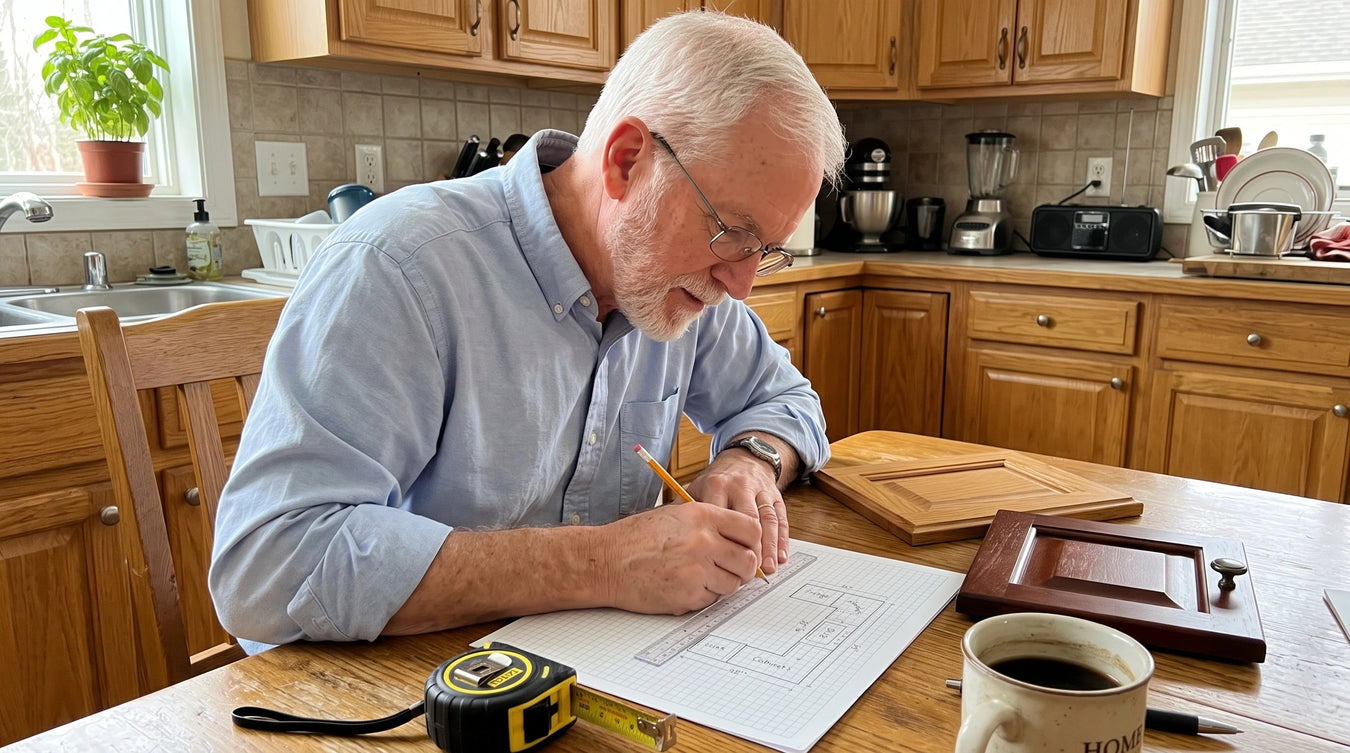
She’d walked into the kitchen and found him at the table with a pencil and a sheet of paper.
He was working out a run of cabinets for their daughter’s kitchen.
In his head, the way he always used to. Sitting there with the pencil going, checking his own numbers.
First time he’d picked up a pencil in over two years.
Three People Who Read The Same Label I Did
Denny was the second person I gave it to. He was not the last.
Since I started writing this up, I’ve been going through the reviews the way I go through everything else. Carefully, and from the back.
These three stopped me.
Gordon L., 61 – Retired Machinist, Dubuque, IA
★★★★★
“I did the honey and cinnamon myself for two months and got nowhere.”
✓ Verified Purchase
“My wife bought me the ingredients and I stuck at it, because I don’t quit things. Two months, every morning, and nothing. Then I read that the capsules everyone’s selling have no cinnamon in them at all and I felt like an idiot twice over. Nine weeks on this and I’m following the conversation at the dinner table again, instead of nodding along and hoping nobody asks me anything. My son noticed before I said a word to him.”
339 people found this helpful
Rosalie D., 69 – Retired Bookkeeper, Bend, OR
★★★★★
“I’d already wasted a hundred and forty dollars on two other bottles.”
✓ Verified Purchase
“Both of them said honey and memory right on the front and I never once turned them round to read the back. I do now. After ten weeks I got through the whole grocery store without my list, which I have not managed since my husband died. I keep the two old bottles under the sink to remind me to check things.”
402 people found this helpful
Yvonne C., 63 – Ordered For Her Husband, Lawton, OK
★★★★★
“He told a story last week that had a beginning, a middle and an end.”
✓ Verified Purchase
“Curtis hasn’t been himself for about three years and he’d gone very quiet, which is not him at all. His doctor said it was his age and that was that. He’s been taking it since March, and last Sunday he told our grandsons the whole story of the ’78 flood, all of it, in order, and they sat there and listened to him. I went and did the dishes so nobody would see my face.”
376 people found this helpful
I Spent Three Hundred Dollars On Bottles With The Main Ingredient Missing
I spent a lot of money figuring all this out.
There’s the six bottles that cost the best part of three hundred dollars.
Before that, forty one mornings of honey and cinnamon. And years of crosswords and fish oil and other failed memory cures.
We’re talking thousands of dollars.
Yet Nora sells CogniHoney for just nineteen dollars and ninety nine cents a bottle. You buy three, and she sends three more along with them at no charge.
Six bottles. Six months. Thirty three cents a day.
Launch Offer
$19.99
Per bottle — buy 3, get 3 FREE for a limited time
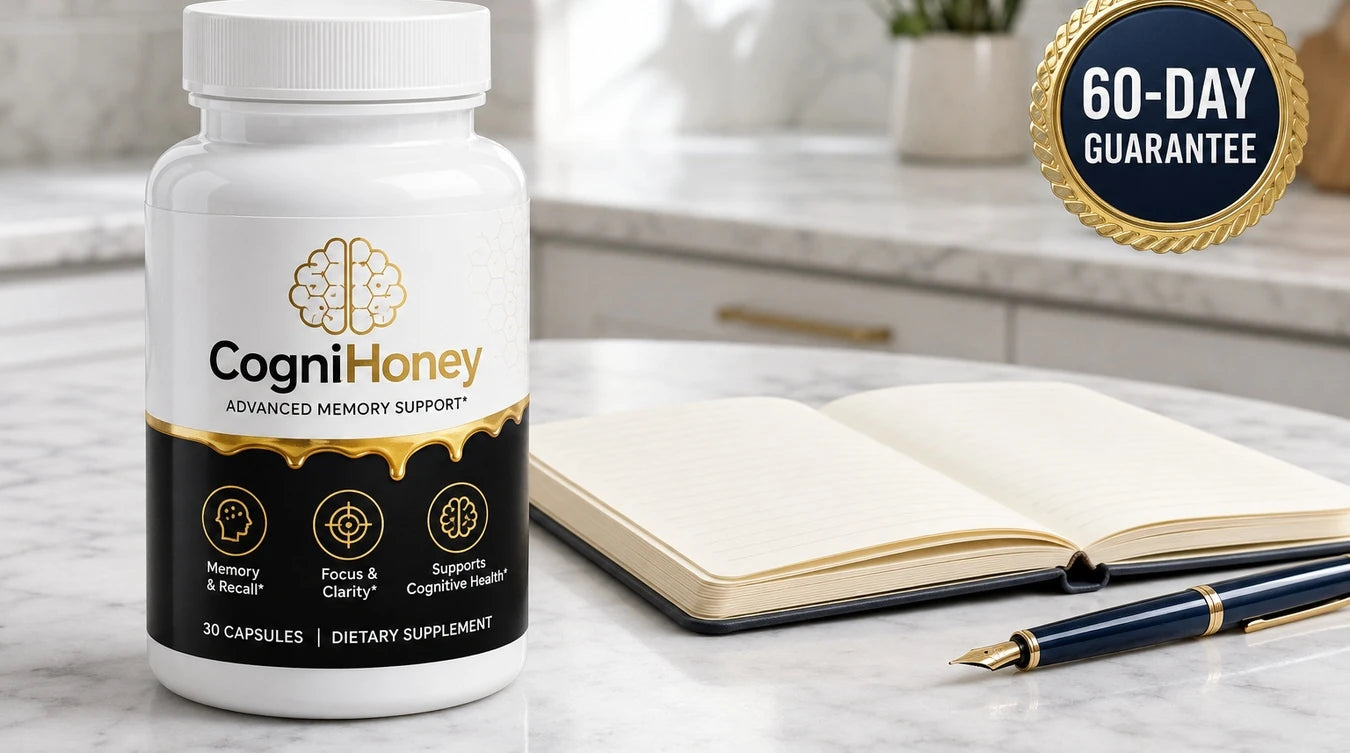
60 Day Guarantee. Take Every Capsule. Send Back The Empty Bottle.
Here’s the part that settled it for me, and I’d like you to read it properly rather than skim it.
You get sixty days to try it, risk-free. Take every capsule in all six bottles.
If your memory doesn’t improve, you email her and you get your money back. The empty bottle is the proof that you gave it a fair go.
So the way I see it, sixty days costs you nothing, but waiting could cost you everything.
Because cognitive decline does not stop while you think it over. You have to take action.
Here Is How Your Memory Improves
CogniHoney ships straight to your door, and most orders arrive within three to five days.
The first morning it’s sitting on your counter, you take one capsule with water, before you’ve eaten anything.
That’s it. That’s the whole routine.
That’s all it takes to regain mental sharpness and clarity.
Add Years of Active Life To Your Future
So there are two ways this goes from here.
In one, a year from now you’re further down the slippery slope. The words come slower.
Your adult children are wondering whether they should take your car keys away.
In the other, things are very different.
You feel as sharp as a teenager, ready to tackle any challenge that comes your way.
You’re looking forward to years, or even decades, ahead with your grandchildren.
Living independently, driving, thriving and loving life.
To make that happen, all you have to do is order CogniHoney today.
Dale Chalmers is a retired building inspector. CogniHoney is a dietary supplement and is not intended to diagnose, treat, cure, or prevent any disease. Consult your doctor before beginning any supplement, particularly if you are taking prescription medication. Individual results vary.
Learn more about memory support and how these ingredients work
Why Memory and Word-Finding Change With Age
Occasional word-finding trouble, walking into a room and forgetting why, or losing a train of thought mid-sentence are common experiences reported by adults over 40, and they become more frequent with each decade. Neuroscientists generally attribute this to a combination of factors: reduced blood flow efficiency to the hippocampus and prefrontal cortex, a gradual decline in the density of synaptic connections used for rapid recall, increased oxidative stress on neurons over a lifetime, and lower baseline levels of certain neurotransmitters involved in attention and consolidation. None of this means memory loss is inevitable or that nothing can be done — it means that the brain, like any other organ, responds to how it is cared for and what raw materials it is given to work with.
Sleep quality, cardiovascular health, chronic stress, and micronutrient status are the four variables most consistently linked to day-to-day cognitive performance in adults without a diagnosed neurological condition. Of those four, micronutrient and dietary-compound status is the one most directly addressed by a daily supplement, which is why so much research attention has gone into natural compounds that may support the brain's own maintenance processes rather than acting like a stimulant or a prescription drug.
The Honey and Cinnamon Tradition: Where It Comes From
Honey and cinnamon have been paired in folk remedies across the Mediterranean, Middle East, and South Asia for generations, generally framed as a tonic for energy and digestion rather than memory specifically. The modern interest in this combination for cognitive support traces back to two separate threads of research: studies on raw honey's polyphenol content (compounds like chrysin, pinocembrin, and various flavonoids that have antioxidant properties in laboratory settings), and a smaller body of research into cinnamon extract's effect on insulin signaling in the brain, since impaired glucose metabolism in neurons has been proposed as one contributor to age-related cognitive decline.
It's worth being precise about what the current evidence does and doesn't show. Laboratory and animal studies on honey polyphenols and on cinnamon's cinnamaldehyde/proanthocyanidin content have suggested antioxidant and anti-inflammatory activity relevant to neuron health. Human clinical trial data specifically on cognitive outcomes is much more limited than popular-science coverage of this topic implies, and no honey-and-cinnamon combination is approved to treat, cure, or prevent any diagnosed cognitive disorder. Responsible coverage of this space distinguishes between "a compound with a biologically plausible mechanism worth further study" and "a proven treatment" — the honey-and-cinnamon story sits in the first category.
Ceylon vs. Cassia Cinnamon, and Why Species Matters
Not all cinnamon is the same plant. "Cassia" cinnamon (Cinnamomum cassia), the type most commonly sold in supermarkets, contains meaningfully higher levels of a compound called coumarin, which in large or sustained doses has been flagged by European food-safety authorities for potential liver effects. "Ceylon" or "true" cinnamon (Cinnamomum verum), sometimes called water-soluble or coumarin-free cinnamon extract in supplement labeling, contains only trace coumarin by comparison. This distinction matters for anyone considering a daily long-term cinnamon supplement, since the safety profile of occasional culinary cassia cinnamon does not automatically apply to a concentrated daily extract.
Lithium Orotate: A Trace Mineral, Not a Prescription Drug
Lithium is best known to most people as a prescription mood-stabilizing medication (lithium carbonate) used at much higher, tightly monitored doses for bipolar disorder. That is a different substance and a different use case from lithium orotate, a trace-mineral form used in low-dose nutritional contexts. Lithium occurs naturally in trace amounts in soil, water, and some foods, and a body of preliminary research — largely epidemiological and animal studies — has explored whether trace lithium intake correlates with markers of neuroprotection. Trace-dose lithium orotate supplements are not equivalent to, and do not replace, prescription lithium therapy or any other psychiatric medication. Anyone currently prescribed lithium or any other medication for a mood or neurological condition should talk to their prescribing physician before adding any new supplement.
What "Brain Fog" Actually Describes
"Brain fog" isn't a formal medical diagnosis; it's a descriptive, commonly used term for a cluster of subjective experiences: slowed thinking, difficulty concentrating, a sense of mental fatigue, and trouble retrieving words or names that feel "on the tip of the tongue." It's reported in contexts ranging from ordinary aging and poor sleep to post-viral recovery, certain medications, hormonal changes, and chronic stress. Persistent or worsening brain fog, especially alongside other symptoms, is worth discussing with a doctor to rule out treatable causes such as thyroid dysfunction, sleep apnea, medication side effects, or nutrient deficiencies.
Lifestyle Factors That Support Memory, With or Without a Supplement
Independent of any product, the research on modifiable lifestyle factors and cognitive aging is fairly consistent: regular aerobic exercise is associated with better hippocampal volume over time; consistent sleep of 7–9 hours supports the glymphatic clearance process the brain uses overnight; the Mediterranean and MIND dietary patterns are associated with slower cognitive decline in observational studies; and ongoing social engagement and novel learning are linked to what researchers call "cognitive reserve." A daily supplement is reasonably understood as one input among several, not a replacement for these foundational habits.
Supplements vs. Prescription Cognitive Medications
It's a fair question: how does a supplement like this relate to prescription options such as donepezil (Aricept) or memantine (Namenda)? These are prescription drugs specifically approved to manage symptoms of diagnosed Alzheimer's disease and certain other dementias, requiring a physician's diagnosis and ongoing supervision. Dietary supplements marketed for general memory support are regulated differently in the United States: under DSHEA, they are not permitted to claim they treat, cure, or prevent any disease, including Alzheimer's disease, and they do not go through the same clinical-trial approval process as prescription drugs. Anyone experiencing significant memory changes should see a physician for proper evaluation.
Polyphenols and Antioxidants: The Bigger Picture
Polyphenols are a broad family of plant compounds found in foods like berries, tea, dark chocolate, olive oil, and raw honey, generally studied for their antioxidant activity. Oxidative stress is one of several mechanisms researchers associate with age-related changes in brain tissue. Diets naturally higher in polyphenol-rich foods are associated in population research with better long-term cognitive outcomes, though isolating the effect of any single compound from the overall dietary pattern remains an open area of research.
Raw Honey Quality: Why Sourcing Is Discussed So Often
Commercial honey varies enormously in processing. Heavily filtered and heat-pasteurized honey, common on standard grocery shelves, loses a meaningful portion of its original pollen content and can degrade some heat-sensitive polyphenols in the process. Raw or minimally processed honey retains more of its original compound profile, which is why formulations built around honey polyphenols typically specify raw, minimally processed, or single-origin sourcing rather than generic blended honey.
Common Myths About Memory Supplements, Addressed
Myth: "Natural" automatically means "no side effects." Natural compounds can still interact with medications or be inappropriate for certain health conditions — lithium orotate is a clear example. "Natural" describes the source of a compound, not its safety profile in every context.
Myth: If a supplement doesn't work in a week, it never will. Compounds that support cellular maintenance processes generally act on a longer timeline than substances that directly alter neurotransmitter levels. Most guidance in this category suggests evaluating results over 30 to 60 days.
Myth: More is always better. Nutritional compounds, including trace minerals like lithium orotate, are formulated at specific doses studied for a reason. Exceeding a labeled serving size is not established to accelerate results.
Building a Sustainable Daily Ritual
Regardless of which memory-support approach someone chooses, adherence research generally agrees on a few practical points: pairing a new supplement with an existing daily habit improves consistency; tracking subjective changes in a simple daily note makes gradual improvement easier to notice; and setting a defined evaluation window (30, 60, or 90 days) prevents both premature abandonment and open-ended, indefinite use without reassessment.
Frequently Asked Questions About Memory Supplements
Do natural memory supplements work as well as prescription drugs? They serve a different purpose. Supplements are intended for general wellness support in people without a diagnosed condition; prescription drugs are approved specifically to manage symptoms of diagnosed disease under medical supervision.
Is it normal for memory to change with age? Some slowing in processing speed and occasional word-finding difficulty is common with normal aging. Sudden changes, rapid progression, or changes that concern family members warrant a medical evaluation.
What lifestyle change has the strongest evidence for supporting memory? Consistent aerobic exercise and adequate sleep both have substantial research behind them, generally more than any single supplement ingredient studied in isolation.
Can I take a memory supplement alongside my prescription medication? Always check with your doctor or pharmacist first, particularly for supplements containing lithium orotate, given lithium's use as a prescription medication at higher doses in other contexts.
Why do some people respond faster than others to the same supplement? Baseline nutrient status, age, sleep quality, and consistency of daily use all vary between individuals, which is part of why manufacturers generally frame results as a range across a 30-to-90-day window rather than a fixed timeline for everyone.
Is a 30-day self-test a reliable way to judge a supplement? A single individual's experience, logged informally over 30 days, is a personal account rather than a controlled study, and it can be useful for deciding whether something is worth continuing without being proof of how it will work for anyone else.
What should I do if I notice no change at all after 60 days? Discuss it with your doctor, since persistent memory concerns deserve a proper medical evaluation rather than simply switching to another over-the-counter product, and check the specific refund or guarantee terms offered by whichever brand you purchased.
Reading Supplement Labels: What to Look For
For anyone comparing memory-support supplements generally, a few label details are worth checking regardless of brand: whether the manufacturing facility is FDA-registered and follows Good Manufacturing Practice (GMP) standards, whether doses of key ingredients are disclosed individually rather than hidden in a proprietary blend, whether third-party batch testing is mentioned, and whether the marketing claims stay within the "supports" and "may help" language required by law rather than promising a cure. These are reasonable due-diligence questions for any supplement category, not just this one.
Why Personal Logs and Journaling Show Up So Often in This Space
Keeping a daily notebook or log, as described in accounts like this one, is a recognized (if informal) way to notice gradual change that would otherwise be easy to miss. Because cognitive shifts tied to lifestyle or nutritional changes tend to be gradual rather than dramatic, a same-day comparison rarely shows anything; a week-over-week or month-over-month written log is far more likely to surface a real pattern, which is part of why so many personal accounts in this category describe some form of daily tracking rather than relying on memory alone to judge whether memory has improved.
How Retirement and Daily Structure Affect Cognitive Habits
Retirement and other major changes in daily routine can shift cognitive habits in ways that are easy to overlook. A structured workday tends to impose built-in memory exercise: deadlines, names of colleagues, scheduled tasks, and problem-solving under time pressure all engage working memory repeatedly throughout the day. When that structure disappears, some retirees notice more of the ordinary word-finding slips that were always there but previously masked by routine, rather than a sudden new decline. This is one reason clinicians often ask about recent life changes, not just age, when someone reports new memory concerns, and why building a replacement structure — a consistent morning routine, scheduled social engagement, or a new skill to learn — is frequently recommended alongside any nutritional approach.
This section is provided for general educational context and does not constitute medical advice. Statements throughout this page have not been evaluated by the Food and Drug Administration, and no product referenced is intended to diagnose, treat, cure, or prevent any disease. Talk to a qualified healthcare provider about any memory or cognitive concerns.